Legal representation in Brazil for clients from any country
Brazil · India

Brazilian legal counsel for Indian investors and commodity buyers

Commodity contracts, sourcing due diligence, mining, land and company setup in Brazil. Based in Sinop, Mato Grosso, Brazil's leading producer of soybeans, corn and cotton.

We work in fluent English and Spanish, as well as Portuguese, for clients from India, China and any other country who need legal representation in Brazil.

Brazil and India in 2026

Trade between Brazil and India is growing fast. Brazil sells crude oil, vegetable oils, iron ore, sugar and cotton to India, and buys chemicals, medicines, agrochemicals and auto parts. In August 2026 the two governments held the 8th meeting of their Trade Monitoring Mechanism in Brasília, and Brazil's Ministry of Development, Industry and Trade signed a memorandum on trade and investment with the Confederation of Indian Industry (CII).

Mato Grosso is at the center of this trade in agricultural goods: in 2025, Mato Grosso exporters shipped most of the sesame and more than a third of the mung beans that Brazil sold to India.

  • US$ 15.2 bnBrazil–India trade in 2025, up 25.4%; Brazilian exports reached US$ 6.86 bn, up 30.2%
  • +82.1%growth of Brazilian exports to India from January to July 2026, when total trade reached US$ 10.1 bn
  • US$ 30 bnbilateral trade target for 2030, set by both governments in February 2026
  • 77.8%of the sesame Brazil exported to India in 2025 was shipped by Mato Grosso exporters

Sources: Ministry of Development, Industry, Trade and Services (MDIC), 31 August 2026; Joint Statement on the State Visit of President Lula to India, 21 February 2026, para. 13; Comex Stat (MDIC), exports to India in 2025, FOB value by exporter's state, HS 1207.40 (our calculation). In the same data, Mato Grosso accounts for 37.8% of the mung beans exported to India.

What Brazil supplies

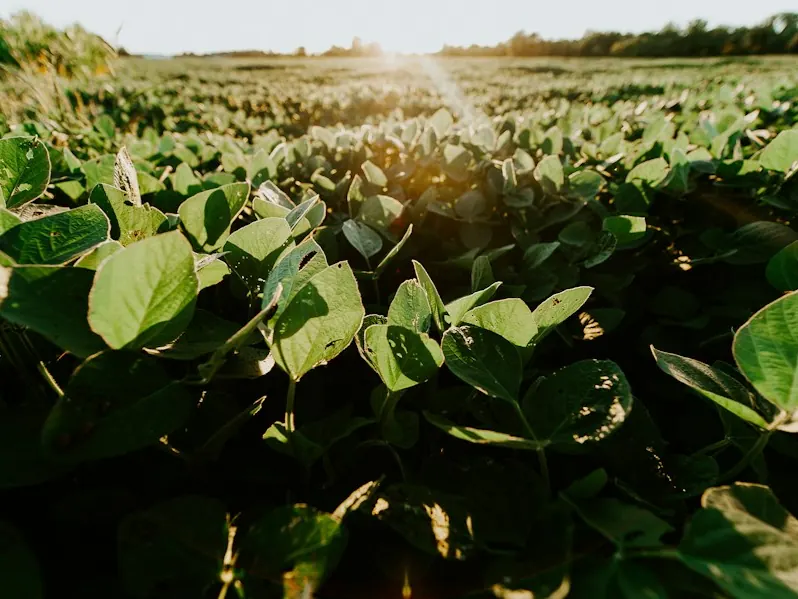
  • Soybeans Soybeans
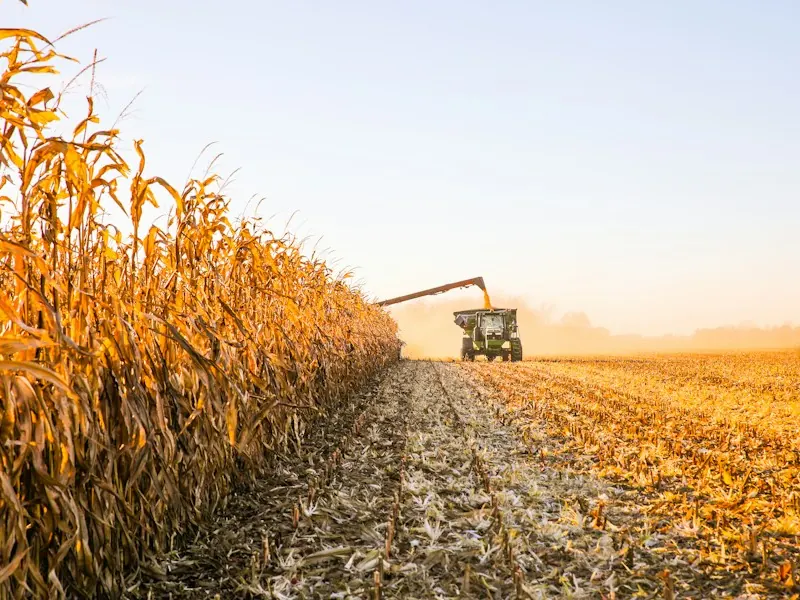
  • Corn Corn
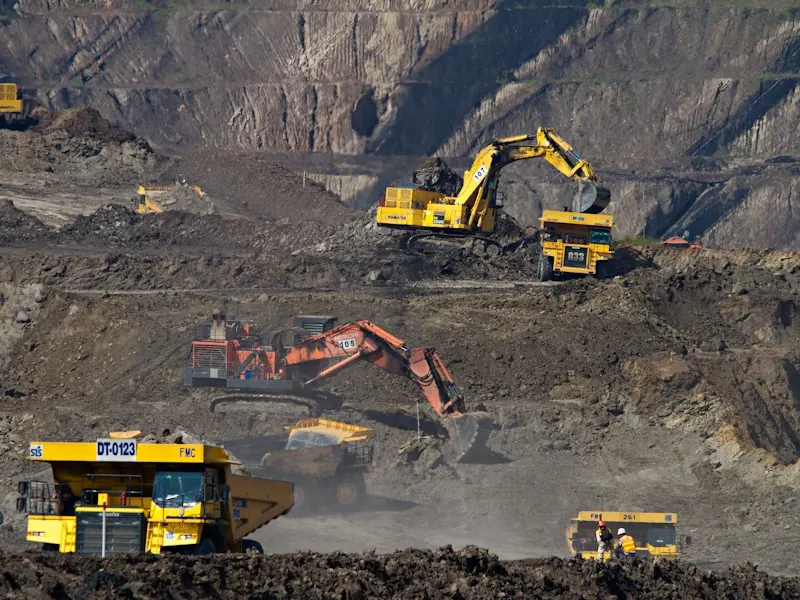
  • Mining Mining
  • Soybeans and soybean oil
  • Corn
  • Cotton
  • Sesame
  • Mung beans and other pulses
  • Sugar
  • Iron ore and critical minerals

Agreements between Brazil and India

Investment Cooperation and Facilitation Agreement

Signed in New Delhi in 2020 and in force in Brazil since 21 December 2025 (Decree 12,666/2025). Each country keeps a National Focal Point, or Ombudsman, to receive investors' concerns: in Brazil, the Executive Secretariat of CAMEX; in India, the Department of Economic Affairs of the Ministry of Finance (art. 14). A Joint Committee handles dispute prevention (arts. 13 and 18). The agreement provides only for arbitration between the two States, not between an investor and a State (art. 19), so the contract with your counterpart remains the main protection.

Double taxation

Brazil and India have had a convention to avoid double taxation since 1992 (Decree 510/1992). The amending protocol (Decree 12,667/2025) applies in Brazil to amounts paid or credited from 1 January 2026. How it applies to dividends, interest, royalties or service fees in a given deal is checked with partner accountants.

Mercosur–India trade agreement

The preferential trade agreement between Mercosur and India has been in force since 2009 and covers around 450 tariff lines. The First Additional Protocol, signed in New Delhi on 14 September 2026, gives electronic certificates of origin the same legal value as paper ones; it still awaits ratification.

Critical minerals

During the state visit of February 2026, India's Ministry of Mines and Brazil's Ministry of Mines and Energy signed a memorandum of understanding on rare earth elements and critical minerals. Mining in Brazil may only be carried out by a company organized under Brazilian law, with its head office and management in Brazil.

Commodity contracts: what to settle before signing

Governing law

Brazil applies the UN Convention on Contracts for the International Sale of Goods (CISG) since 1 April 2014 (Decree 8,327/2014). India is not a party. Whether the CISG governs a Brazil–India sale therefore depends on the contract and on conflict-of-laws rules, and the governing law should be written into the contract.

Arbitration

Both countries are parties to the New York Convention on foreign arbitral awards: India since 1960, Brazil since 2002 (Decree 4,311/2002). An award rendered in India takes effect in Brazil once recognized by the Superior Court of Justice (STJ), which does not review the merits (Law 9,307/1996, arts. 35 to 39).

CPR and guarantees

Brazilian farmers commonly sell and finance their crops through the Rural Product Note (Cédula de Produto Rural, CPR, Law 8,929/1994), which can be registered and backed by guarantees. We review CPRs, pledges of crops and supply contracts before the money moves.

Sourcing due diligence

Before buying from a farm or a trading company, we check Ibama and state environmental embargoes and fines, the Rural Environmental Registry (CAR), overlaps with indigenous lands and protected areas, and the deforestation history through satellite imagery.

Investing in Brazil: company, land and representation

An Indian company can hold shares in a Brazilian company or set one up. Purchase and lease of rural land by foreigners and by Brazilian companies controlled by foreign capital are subject to area limits and approvals (Law 5,709/1971), so the structure of the deal is designed before signing. When the shareholders or directors are abroad, Brazilian law requires someone in Brazil to represent them:

  • A director or officer of a Brazilian company who lives abroad must appoint a representative resident in Brazil, with powers to receive service of process for at least three years after the end of the term (Law 6,404/1976, art. 146, para. 2).
  • A foreign shareholder or director of a Brazilian company files a power of attorney granted to its representative in Brazil with the Commercial Registry (DREI Normative Instruction 81/2020, art. 12).
  • A foreign entity enrolled in the Brazilian taxpayer registry (CNPJ) must keep an attorney-in-fact or legal representative domiciled in Brazil (Federal Revenue Normative Instruction 2,119/2022, art. 6, para. 1).
  • Foreign direct investment is reported to the Central Bank of Brazil by the Brazilian company that receives it (Central Bank Resolution 278/2022, art. 17).

We can act as that attorney-in-fact in Brazil, register the company and its foreign investment with partner accountants, and follow up on notices from environmental, mining and tax authorities. More on company formation, mineral rights, rural land and environmental licensing is on our page for foreign investors.

How we work

  1. Meetings are held by video call, in English. Mato Grosso is 9 hours and 30 minutes behind India: 9 a.m. in Sinop is 6:30 p.m. in New Delhi and Mumbai.
  2. After the first meeting, we send a written fee proposal in English, with scope and timeline. Clients abroad pay from their own country through a regular foreign exchange contract.
  3. Foreign documents used in Brazil require a sworn translation into Portuguese and an apostille; India and Brazil are both parties to the Hague Apostille Convention.
  4. We are Brazilian lawyers and advise on Brazilian law only. Questions of Indian law must be handled by lawyers admitted in India.
Diovane Franco

Lead lawyer

Diovane Franco is the founder of the firm and practices environmental and agribusiness law. He is the author of Embargos Ambientais em Áreas Rurais (Thomson Reuters · Revista dos Tribunais, 2025) and co-author of Cadastro Ambiental Rural: direito, prática e tecnologia (Thomson Reuters · Revista dos Tribunais, 2026).

Offices in Sinop, Mato Grosso (head office), Belém, Pará, Brasília, Federal District, Novo Progresso, Pará, and Rio de Janeiro.

Contact

How to start

  1. Write to us by e-mail or WhatsApp, in English or Spanish, with a short description of the project and where your company is based.
  2. We schedule a video call at a time that suits your time zone.
  3. After the call, you receive a written proposal with scope, timeline and fees.
  4. Payment from abroad is made by bank transfer, through a regular foreign exchange contract.
E-mail
[email protected]
WhatsApp
+55 66 99955-5402

Pages for other countries and languages

This page is for information only and is not legal advice.

Contact